Or: How I Learned to Stop Worrying and Love the Booker Prize
Something had happened.
Nobody knew quite what.
A gloomy coastline. There were fragments. Some people. An object of uncertain significance had washed up. Explanations were offered, then withdrawn. Or perhaps they weren’t explanations at all.
I kept reading.
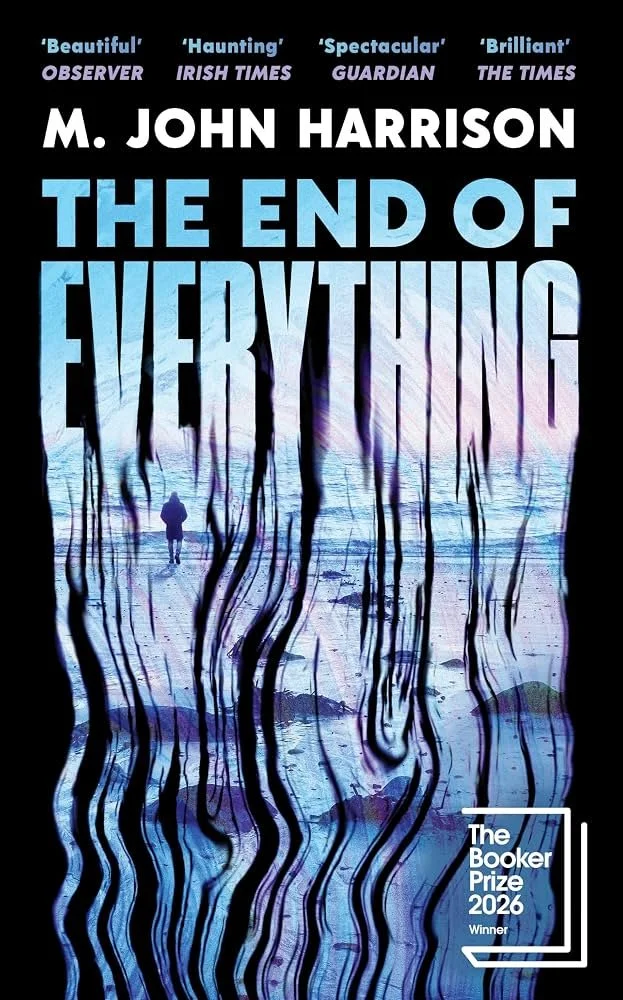
This was M. John Harrison’s The End of Everything, winner of the 2026 Booker Prize. A slim, brilliantly written, intellectually ambitious novel by a writer who has spent sixty years refusing to be told what sort of books he should write.
I admired it enormously and read it in two days. Well, at least I think I did. Things, huh?
Remember Blair Witch, or Cloverfield. There was something reminiscent of those found-footage horror films in which the camera shakes, the image dissolves, a figure appears momentarily in the darkness, and someone shouts, “What was THAT?”
In Harrison’s tale, we never find out, though calling the conquering beings the “iGhetti” was almost on the nose. Almost.
The critics call this ambiguity. The author calls it freedom from genre conventions. The Booker judges call it a winner.
I called it an evening, and wondered whether I’d missed a couple of chapters.
Last year’s Booker winner, David Szalay’s Flesh, was also short. Also spare. Also concerned with the bewildering business of being human. But Szalay’s extraordinary achievement was to make everything so obvious. Stark. Not simplistic. Just devastatingly, uncomfortably blunt and clear.
Harrison, by contrast, believes that clarity is a suspicious activity, invented by the marketing departments of large publishing houses.
He’s right. Probably.
After all, why should a novel explain itself? Why should a mystery be solved? Why should a reader expect anything resembling satisfaction merely because they’ve invested several hours of their life?
These are bourgeois expectations. Probably genre-related.
And yet.
There is surely a difference between a novel that leaves us thinking and one that leaves us wondering whether the author has deliberately hidden the last twenty pages.
I wanted to love The End of Everything. The prose is remarkable. The imagination extraordinary. The refusal to conform is admirable.
But can a book be brilliantly written, intellectually ambitious and still leave you feeling short changed.
Anyway, I hear Profile Books have just sent an order of 100,000 to the printers.
Something moved at the edge of the page. I looked again. There was nothing there. Perhaps there never had been.