Content marketing is king, but that's not enough

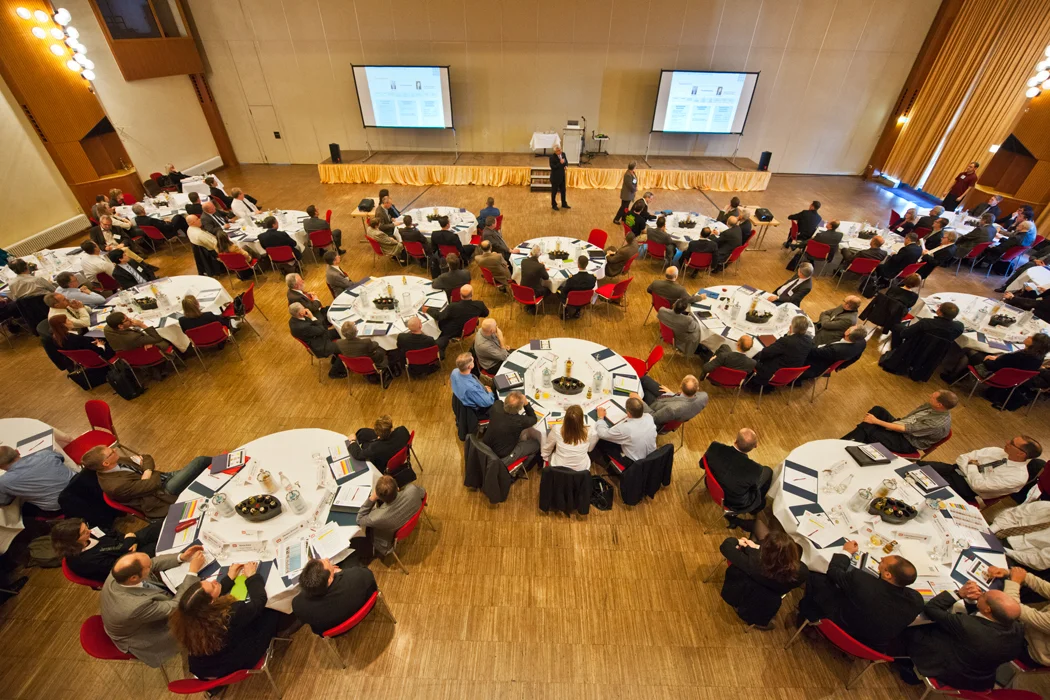
Many professional advisors set out to make their seminars and conferences as engaging as possible.  Unfortunately, few succeed.  Away from the obvious proposition of high-end corporate hospitality, many firms seem to struggle to create truly interesting 'thought-leadership' programmes or compelling live events.  The marketing objective may well be to create meaningful conversations with clients and prospects.  Too often though, these forums and events fail to achieve very much and clients seem increasingly reluctant to attend.

The particular challenge of high-value audiences

The challenge of making the participant experience engaging is even more difficult when the audience is made up of high-value clients, who seem put off by the predictable format and experience of taking part.  For example, at a family wealth management event, you can be sure that your client guest has turned up for more than the coffee.  Indeed, they may well have heard your keynote speaker before and yet, on this occasion, they have made a decision to attend your event, amidst a plethora of other opportunities.  So there has to be something of substance that they can take away from the experience of attending, or else they are unlikely to engage much further, nor return in the future.  Over the years our learning has been simple, but profound.

1) Content is king, but that’s not enough

Excellent content, research and thought-leadership is not enough.  Firms need to find ways to engage beyond demonstrating what they know, through being more imaginative about how they share their ideas.  While many firms wrestle with upgrading their digital content marketing, some seem to have simultaneously given up on personal client engagement through events.  Online interaction can be measured anonymously in terms of clicks and hits but, when a client has given up their time to be with you in a seminar or conference, this can be a pivotal moment for the relationship.  It is also the perfect opportunity to completely blow it.  The key is to be counter-intuitive and, therefore, less concerned with the content itself (which, if it has any genuine vitality, will already have been widely syndicated well before your event) and more concerned about how imaginatively you can share and develop those ideas with your audience through a live event format.  No one watches a TV show because it is “well-lit and can be clearly heard”.  But (depressingly) too often this is the bar at which live event production seems to have been set.  

2) It's not about you, it's about your audience

We have found that clients engage more with the subject and content when they actively participate in the discussion, not just with the panel or speakers, but crucially, with one another.   It sounds simple, but it is so often lacking at corporate events, where the physical and intellectual focus is always the stage, or the screen or the lectern, and the expertise is ‘broadcast out’ to an audience, not sought and explored from amongst an audience.  To gain the best return on investment for all parties, the level of interaction needs to be tuned up throughout the event - not just be left to emerge in the session labelled 'networking break’.   Think of the whole experience as an opportunity for clients to engage with one another from initial meeting and greeting to heading away from the event.  Imagine then what that might look and feel like if you were the guest attendee?    

3) Your senior exec host is not David Letterman

Don't mistake technical expertise for engagement or live facilitation expertise.  We believe that expert programme design and facilitation can transform the impact of these live client events.   Too often though the hosting and facilitation is delegated upwards to the senior sponsoring Senior Executive or Partner in the room.  This would not happen in the world of television, or theatre, or film, where the Senior Exec who managed and financed the Production is seldom asked to inelegantly and uncomfortably front the marketing, or recount the plot, theme and arc of the show.  Of course, it's a difficult discussion to have within the Firm, but with the experience of your client in mind, one worth having.  

Seen anything engaging lately?  

I have had the pleasure of working with high-value audiences around the world, from fourth generation family business owners in Europe and the US, to next generation clients in the faster growing markets of Asia.  I am constantly on the look-out for innovative thinking, speakers and live event formats for high-value audiences.  I have obsessed on these issues of content production and engagement and remain bewildered by some of the things I see.  If you have seen genius, or imagination, or something wonderful I would love to hear more.


Amazed that Alumni access is free on Linked-In

As recently as 2005, ITV shelled out USD250 million for Friends Reunited. Unfortunately for ITV and subsequent owners DC Thomson, the rest of the social networking world then exploded with new innovation, photo-sharing, selfy-videos, and thumb-swiped connecting and adjoining, etc.  Friends Reunited was left by the road-side in the rain while the rest sped past.  

But there was something quaintly wonderful about Friends Reunited; with its central premise: re-connect with people you used to know, rather than the more needy millennial angst of connect with people you want to know now.

Today over 1.5 billion users scan Facebook, we rate our friend's hazy photos of their pets and over 400 million of us navigate our professional network, agonising over our profile picture on Linked-In.  Forget the resume, or the depth of your professional experience, where did you get that head-shot done?  Meanwhile, our kids fret over their follower numbers on Instagram and Snapchat and look unimpressed at our meagre 82 followers on Twitter.  

Linked-In though seems to have done a favour for the nostalgia junkies amongst us, but it has also given a terrific research tool out to the world, for free.  Those of you interested in the career destinations of your University Alumni are likely to find Linked-In's smart Education pages a real boon.  If you join your University Group for example (I think pretty much are all open groups) you can now search that University by graduation class, check-out their employers, where they live, etc.   You can work out your connectedness to a class thirty years ago and assess their, ahem, degree of separation from you and one another today.  

If you were to try to purchase a CRM with the functionality to do this it would cost a fortune and have all kinds of data validity issues (not to mention raise data protection questions).  But here it is on Linked-In.  User generated.  For free.  Spookier still, you can "pretend" to have gone to a much more prestigious University.  For example. if you are considering investing in an MBA at a major business School, you can instantly see [with some marginal scope for sampling error, or social fibbing] where you are likely to end up working.  

Should I be surprised that 88 current employees of Apple [who are on Linked-In] went to Harvard Business School, or that over a 1,000 of their classmates [who are on Linked-In] are still hunched over assignments at McKinsey, Bain and BCG?  But there they are.  A click or two later and you can discover pretty much who they are, where they studied undergrad and where in the world they now live.  I am sure there brighter minds than mine who can find more substantive ways of mining the data, creating statistics or developing a useful analysis or hypothesis.  Headhunters anyone?  Maybe you already have?

In a realm of paid-for professional Google Apps and MSoft One Drives that charge for services, the Education section on Linked-In is rather extraordinary.  You can't access it all of it for free (particularly on individual searches) but I would not be surprised if the whole platform migrates very soon to a Premium option only.  

Check it out while you can.  

Why Thought Leadership is the new Rock 'n' Roll

Brand building used to be about what people said about you after you left the room.  Now it’s about what people share about you…often while you’re still there in the room.

Smart content widely shared can help build brands and promote ideas.  But while digital distribution creates an easy route to an audience, the most powerful catalyst for sharing is often through live ‘thought leadership’ events.  In the same way live music has grown exponentially (while physical and online music sales have collapsed) thought-leadership events are now the new rock and roll.

So making it easy for your clients, guests or professional network to share something smart and intelligent about you is a great way of marketing your brand and, the icing on the cake is, its usually free.  Many of us enjoy discovering and then sharing something cool amongst our friends, colleagues and (hopefully with some discernment) our professional network.  The brevity and convenience of Twitter has also blurred the types of content we share across these various networks; randomly scattering witty engagement across family, friends, business associates and customers in less 140 characters.  The ‘holy grail’ of social sharing used to be “You will never believe who I met last night” (with appended hazy photo of very famous person).  Now the professional equivalent is the clever info-graphic, the gif, the jpeg, or the video link to something cool, interesting or compelling.  

Helen GREEN" ARTIST AND ILLUSTRATOR.  SEE LINK

To, ahem, illustrate. The graphic artist Helen Green recently shared a hand-drawn montage [a gif] she had created of David Bowie, his face morphing through the multiple-personas of his career in seconds.  As something created to mark his birthday it was beautiful in its own right.  The great man then died the day after and it became like a gift to the world; viewed and shared by hundreds of thousands of people.  [You can check out the image and her other work here, at:  http://helengreenillustration.com]

But it does not have to take a creative genius’s death to get your content noticed.  You probably already manage content sharing campaigns through a myriad of channels and there is much good advice on here and other forums on what content to create and how to go about getting it seen.  Even so, that recent article you posted on your beautiful website about your Firm’s ground-breaking ‘white paper’ or insightful perspective just doesn’t seem to be flying between devices...  My advice?  Get a room.  Or rather, get people from your firm and your clients in the right room.

Are Thought Leadership events worth the money?

Think about the last time you received one of those emailers for the very latest “thought leadership” seminar.  An opportunity to spend anything up to 5,000 dollars a time seeing the latest greatest most cutting edge thought leadership speakers at some cool conference with an even cooler name: Wired, Zeitgeist, TED XYZ, Smorgasbord, or Whatever.  Tempting and sounds interesting you think, but is it really worth it?  

There has been an explosion of formats, venues, providers and sponsors of ‘thought-leadership’ events.  In 2015, the FT reported the huge growth in players seeking a part of a burgeoning market for “thought leadership” with strategy consultants, Big Four advisors and even headhunters seeking a piece of the market which was once the preserve of the Business School.  Strategy consultancies such as Bain and Boston Consulting Group have long fashioned themselves as thought-leadership providers, but now publishing companies, technology start-ups and recruitment consultancies are striving to land chunks of a global market.  While many of the world's leading Business Schools now stream the content of their annual strategy forums and flagship classes online for free, there still seems to be a growing demand to actually be there, in the room.

As the the UK Editor of a leading print and digital magazines told us: “We used to produce a magazine and put on the occasional event.  Now we manage a complex events and conferencing business, which allows us to continue publishing a print magazine”.   Meanwhile, the Marketing Society showcases big name speakers and captains of industry at ‘masterclass’ seminars.   The annual Festival of Marketing in London flies in former Space Shuttle commanders and Mindfulness experts to help you realise your strategic ambitions.  These events cost almost a £1,000 a ticket.  PR Week have just announced that their 2016 event will last 4 [yes four] days at £1,800 a ticket.  The CEO has to stump up a six-figure "patron fee" to get an invite to (real) TED or sell and lease-back their corporate headquarters to secure a room at Davos.  Even tickets for one of the proliferation of TEDx events can be expensive and hard to obtain.  

So are these events worth the money?  Well if your objective is not just personal content consumption; but thought-leadership sharing, then we think so.  If you need an opportunity to collate and share smarts back with the leadership team at HQ, then some are better than others.  One of our favourites in the UK is Wired.  One of the reasons it works is that many in the audience had to do much more than clear space in the diary to attend.  At £2,000 a ticket for a two day conference, the attendees have either had to personally dig very very deep, or play a blinder with their line-manager to get the ticket cost picked up by their employer.  But because of that, you get a rather extraordinary audience of people in the room.  Nor just presenting, but in the audience.  Wired also get the genius of sharing content and ideas better than most.  In 2015 they invited Jacob Whitesides [no, I had not heard of him either...] to sing a song or two - not just for the benefit of those in the room but because a small percentage of his 1.3 million 24/7 Instagram followers would share that he was singing for them “@Wired 2015".  Forget thought-leadership kudos; your teenage daughter would think that you're cooler than cool.    

The real reason for the growing popularity of live thought-leadership events is that they are immeasurably more fun and engaging (even the bad ones) than staying at home and plugging into iTunes U for three hours and snacking on popcorn.  Because of this, brands need to think about how they share content, not via a lonely digital marketer back in the office, but through the very many, in real-time, attending a live event.  It is so much more impactful to syndicate content through the endorsement of real attendees, not distant web browsers.

While the importance of digital channels is clearly vital, investment in thought-leadership programmes and events, if produced professionally and imaginatively, can also be a powerful content tool for the marketer.  When a large number of attendees sharing content are your customers as well as positive advocates for your brand, then the value of bringing them together in a room - can take on a whole new dimension. 

A Year of Living Precariously

The ALPS from SPACE, DECEMBER 2015 FROM TIM PEAKE

2015 ended with rain.  Lots of it.  The wonderful city of York is, as I write, still submerged.  This week Leeds and Manchester suffered the same fate as Carlisle last.  Temperatures have been regularly in the high-teens in London throughout November and December.  The garden trees are ablaze with fresh-blossom.  The astronaut Tim Peake flew above the Alps this week and posted an image that looked like the English Lake District in July [see picture, left].  This is not the opening of yet another three-part dystopian ‘young-adult’ fiction, but the warm soggy reality of El Niño Britain in late 2015.  Perhaps this year even the most hardened climate change-denier amongst us might now be swayed by Moscow’s absence of Christmas snow and might watch, wide-eyed with nostalgia, at Ruben Östlund’s wonderful Force Majeure, where the local burghers detonate explosives across the mountainside because a phenomenon known as “too much snow”. 

@GAPINGVOID: A CONSTANT SOURCE OF GREAT INSPIRATION

As the world slowly percolates, my business venture Wave Your Arms morphed from a fanciful idea into something ever more stretching and hugely fulfilling, yet imbued with all the emotional highs and lows that the ‘entrepreneurial sages’ rightly predicated.  In the past twelve months I have visited China, Finland, Singapore, Switzerland and Los Angeles, with many of those experiences documented in these pages.  I have had the pleasure of working with Prof Brian Cox, Harper Reed, Sir Clive Woodward, Sean Fitzpatrick, Jeremy Paxman, David Rowan (of Wired), Eliza Maningham-Buller, Iain Poulter, Paul Casey, Remi Krug, Adrian Wooldridge (of The Economist), as well working with the leadership teams of some extraordinary businesses and with the colleagues and inspiring Faculty at London Business School. As it says in our own marketing blurb: "the key ingredient is in harnessing the skills and energies of great people who are delight to work with and love what they do". And we have done that in spades.  I remain...Humbled. Amazed. Grateful. And hungry in 2016 for more.   

As readers of this blog will know, the world of arts/culture/sport/media and creativity are our continued source of inspiration and increasingly shape the way we [should] think about the world of work.  If we could ever bring even the smallest essence of the joy that great film, or theatre, or music creates into the corporate workplace then much would be transformed: careers and lives would be enhanced and the concept of work/life balance rightly blurred further, not made more marked. I am not sure this has been as stellar a year of creative inspiration as 2015, but part of that is a narrowed bandwidth on my part and a creeping 'conservatism' in taste that my kids clearly abhor and something I need to address in 2016.   Anyway, as has been the tradition on here for a few years now: here are some the MOTD style edited highlights.

B O O K S

The year started with a book and it is the best book I have ever read about music: Joseph O’Connor’s The Thrill of It All . The story follows the formation of a band called The Ships in the Night and the relationship between two close friends from different sides of the planet (Irish Robbie and Vietnamese Fran) and a brother and sister rhythm section to die for.  The typical mode for these tales (see The CommitmentsOnce) is for heroic failure to be celebrated amidst fart gags and much acoustic troubadour-ing.  Here the scale is writ much larger: from Luton to Dublin to New York, from backstreet bars 'open mike' to headlining the Glastonbury Festival.  From sleeping in crap vans to flying on private planes.  Success and failure is found not heroically and humbly, but hugely and devastatingly.  The characters are drawn like old friends you will have loved, lost and clung onto over the years and the two-thirds-in kick in the teeth for Robbie and the reader is a masterstroke.  Since finishing the book (and having bought copies for friends and family) I keep hearing The Ships on the radio, and on Spotify, and in old records I have not listened to for years.  I wrote to Joseph and blathering-ly offered to adapt his book for the screen.  Still waiting for a reply.

Meanwhile, David Laurie produced his labour of love: Dare: How Bowie & Kraftwerk Inspired the Death of Rock 'n' Roll and Invented Modern Pop Music.  It’s a great read, not just because the topic resonates with anyone blessed with ears that heard the tunes of the early ’80’s first-hand, but because of David’s personal ownership of every reference, every recommendation, every memory of a record heard for the first time, it holds the attention and makes you dive straight to Spotify to re-discover again.  Brent Schlender and Rick Tetzel’s Becoming Steve Jobs was intriguing, involving and enjoyable in a way that the official Isaacson biography wasn’t. It covers the same territory but takes a view and is full of strange moments (for example, when Jobs licks the screen of the monitor when reviewing a beta version of OSX.)  I have not yet ventured out to see Danny Boyle’s film version of Isaacson’s book, uncertain following the reviews that emphasised the dark side of genius, not the illumination he created. I can wait for a small screen which is easier to walk away from.  For me, Jobs is the man behind “here’s to the crazy ones” which is framed on my wall alongside an email I received from Jobs himself which said (in response to a speculative email I sent to him in 2010): “No interest.  Thanks for thinking of us.  Steve.”  Much missed that man.  

M U S I C  

Apple launched Apple Music, but it proved to be a huge disappointment and despite some smart marketing (which is no surprise) and hiring Zane Lowe, the fundamentals that Steve Jobs would have insisted on [it should improve your life by using it], it is clunky, slow, poorly laid out and harder to navigate than Spotify.  The investment in both subs though means I have stopped actually buying music.  If I've stopped buying - and most people under the age of 20 don't even consume through paid subscription - then the music business really is dead.  I still wander past HMV in awe that it is still there.  

I dived into rediscovery in 2015, seeking out bands I had not heard of for years.  Sometimes a new band being the prompt to revisit elsewhere in the distant past.  So you can listen to Trevor Horns' production masterpiece on Yes' Owner of A Lonely Heart or Grace Jones' Slave to The Rhythm, and then get blown away anew by the production on Everything Everything's Distant Past.  Joseph O'Connor's book took me not to the folk-rock I expected but to Cloud Castle Lake and their extraordinary Sync (which sounds like the Tijuana Brass meets Bronsky Beat).  Album of the year (on plays, if nothing else) is Marks To Prove It, by The Maccabees.  There is something wonderful about the ambition these guys have.  While much of the world seems to have given up on guitars: these use the old-fashion of a riff, or a triumphant chorus and throw in rhythm and texture and lyrical surprise after surprise.  It's a better album than The Foals' What Went Down, which was just really good, not really great: though Birch Tree has been played a lot.  Stereophonics have occupied the car stereo for much of the year and I've also found terrific quieter moments with Daughter and also rediscovered Laura Groves (formerly known as Blue Roses) from Shipley, and the lovely Emelie and Ogden with Ten Thousand or more cinematically it Public Service Broadcasting, or Hot Chip.  The Mercury Prize nominations promoted me to re-discover Gaz Coombes' ebullient Matador, but also introduced me to Benjamin Clementine and his album At Least for Now.  I knew none of the backstory of the exiled-Englishman busking to live down and out on the streets of Paris.  But here was this man with a voice to die for singing of hopes and fears and ambitions using snatched conversations on the subway and a friend's encouragement to seize all that he could possibly be, in London..."I won't underestimate who I am capable of becoming".  People close to me hate the song.  I just listen to a man whose almost mock Estuary accent soars!  Still the song of the year [see video below).   

The business of emotional happiness

For me this week marked the end of a rather extraordinary couple of months professionally.  OK that’s not the most exciting line to start a blog entry.  I will try again. After partying with the HBO crowd at the 67th Emmy’s in LA, interviewing some of the world’s greatest sports personalities and leading a conference for family business tycoons in Shanghai, I am now ready for the weekend and a return to “normal”. 

Two nights ago I was in The House of Roosevelt on the Bund drinking Grand Cuvee with Remi Krug…of the House of Krug [see picture below]. If you’re going to learn about something you know nothing about; why not go for expertise?  I’d love to learn to play funk guitar riffs with Nile Rodgers or execute a paradiddle with Neil Peart.  And so it was with Monsieur Krug and his champagne.  A warm and very articulate man, he described himself as being in “the business of emotional happiness.”  I was very happy to drink to that.  Unfortunately, although Monsieur Krug's joie de vivre is infectious, the environs of Shanghai 's business district seemed much less vibrant and upbeat than my previous visits.  

Shanghai was bigger and taller than my last stay two years ago, but it had also become somehow too familiar and less fun through being more and more like everywhere is else in the world.  On the Pudong side of the river, it’s like Canary Wharf, downtown Manhattan, or Hong Kong central.  Only taller and bigger, with no one there working. 

SHARING A GLASS WITH REMI KRUG

The traffic remains horrendous, but strangely only on some roads.  Taxis are numerous and passenger-less.  The new Shanghai tower [736 metres] stood proud against the blue sky but there seemed little evidence that it is actually being fitted out.  The popular ‘bottle opener’ tower now looks quaint and impressively cloud reaching, not just plain silly like its new cylindrical neighbour.  We walked through the IFC Mall, which remains sparse and empty.  Of course the glamorous shops are there: Gucci, Prada, Armani, Channel, but are staffed by bored besuited souls, left lonely in the air-conditioned vacuity of these brightly lit spaces.  Where was everyone?  You could clap your hands in the Mall and it echoed like Dionysius's ear. In my 34th Floor hotel room, I could hear the traffic outside.  But not the rumble and cacophony of horns and sirens and determined progress that you hear on New York’s great boulevards.  But individual horns, beeped at one another. There are no great ‘mass crossings’ of people at the road ntersections, but the occasional electric moped, using road and pavement to get somewhere no particular hurry.  I may be wrong.  Indeed my view may be myopic from the lens of some very smart 'high-end' settings, mainly in Pudong, but there were too few people there to make the place seem real or thriving.  

One of the speakers at the Conference I hosted was Erwen Ramburg, a investment banking market analyst based in Hong Kong and the author of The Bling Dynasty; a fascinating dissection of the dynamics behind the explosive growth in luxury brand shopping in China.  His was upbeat on the prospects for the sector: predicting that 50% of total luxury brand sales by 2020 will be by Chinese consumers.  It just seems that shopping in the future is more likely to be in Dubai and Knightsbridge then it is in China.  The Apple Store in Shanghai was rammed, but we all like to browse.  The Park Hyatt restaurant shut at 10 pm.  It was closed completely on the Monday.  The growth of Shanghai has been astounding and there were many Westerners in the smart bars and high-end hotels, but many we met were there for a short meeting, or the golf, or passing through to Hong Kong or somewhere more vibrant in the Region. 

Dead buildings.  

We had drinks on the rooftop of the Ritz-Carlton, without the cover charge demanded two years ago.  In the distance, across the river - but still pretty central and within a mile or so of the Bund we saw something very strange indeed.  Shanghai is brilliantly lit at night.  From the Pearl Tower across the borders of the waters, amazing light shows, illuminated skyscrapers and river front buildings with vast advertising hoardings and LED graphics shimmer through the thick air.  Below the ‘Mickey’ silhouette of the vast new Disney Store and Marketing suite shone crisply.  But there in the near distance were some great towers; buildings that would be monumental edifices in Paris, or London or Frankfurt.  But here they were just dead buildings. No lights on. No one home. Like doomed landmarks in the neon.  

We wondered whether the city was shifting the greater gravity of its business to Pudong at the expense of the older towers in the North of the City.  So perhaps not all was new new, but that such vast new development was at the expense of the older city. Perhaps the growth is not always exponential as thought by some economists, or prophesied by the Chinese government, but however well planned, such growth is simply canabalistic.

China has this month announced a gradual relaxing of its one-child policy from 2016.  But will the next generation of young people born as a result of the economically “planned population growth in 2030 and 2040” want to staff the soulless Malls of Pudong?  I have my doubts. 

Sharing memories of Hull with John McCarthy

It was my absolute pleasure last week to enjoy the company of John McCarthy, together with 50 alumni from Hull University, organised with such care and attention by the lovely Jane Bennett-Powell.  I have written about John before and his rare ability to tell a story with humble profundity, wrapping the graphic experience and horror of captivity interwoven with a series of warm reflections on his fellow cellmates.  Hearing the story again truly makes me wonder - would I have even lasted 15 minutes, let alone five years?  At The Union, he told a nice story about being thrown out the the Brynmor Jones Library for smoking on the back stairs.  The man who evicted him; none other than Philip Larkin.  

UPDATE:  November:  A nice film of the event here from the Hull University Alumni site and thanks to Jane, Chris Cagney and the rest of the team for helping to put the event on at the delightful Union Club in Soho.  Even the credits made me smile.  Not drowning, but waving.   

TEA AND SCONES AT THE 67th EMMY AWARDS

I was delighted to be hosted this weekend by these lovely people from BAFTA LA at the 67th EMMY Awards, held in downtown Los Angeles.  There are few experiences like it really! An awards night, dinner and various parties for about 3,000 TV people; talent, producers, writers [yes, writers get lots of nods], comedians, musicians and technicians.  The event was hosted by Adam Sandberg, who was OK, but probably a little bit too smart, so some of the very "in" jokes fell flat.  The three-hour event was polished within an inch of its life, with the show never managing to get in the way of the 4 minute ad breaks, which absurdly broke the pace and rhythm of the event. Appropriately, all the great highlights of the show were the Brits: Armando Iannucci swearing while winning a writing award for Veep, Ricky Gervais pretending he'd won an Emmy [despite only being booked to dish out an award], James Cordon for his hilarious homage to accountants Ernst & Young.  We'd warmed up [literally in 95 degrees heat] for the main show at the BAFTA LA #tvtea the day before, which was packed with ambitious young thesps stumbling on vertiginous heels through a throng of older, wiser, more sun-soaked ex-pats who had served their time before the cameras when there were fewer channels and the British accent alone had been aphrodisiac enough.  A lovely moment for me was when a young British actress, surrounded by admirers, offered the perfect self-deprecatory line, with irony, of course:  "Yes, I'm currently working as an actress, but I am trying to break into waitressing."  24 hours later we were in the bar with Doug from House of Cards.  Not surprisingly he was drinking mineral water.  More surprisingly, he smiled, briefly.  We shuffled towards the stage as Andrea Bocelli broke into a rendition of Maria, or Tonight, or something evocative and meaningful.  Bocelli sang three numbers and then a brilliantly attired cover band murdered every song you've ever loved with such aplomb that I have decided not to seek out the originals ever again. They were that good.  Oblivious to the entertainment, 3,000 people continued to network.  The dance floor remained sparse.  At the Emmys, Game of Thrones cleaned up about a dozen awards and long-overlooked John Hamm finally won a best actor gong for his decade of being the inimitable Don Draper.  We ended up that night at the HBO party which was suitably 'aflame' with a Dragon theme, which only made the nighttime humidity that bit more unbearable, but it did make the bar stations and 'air-conditioned' disco the only cool place to be.  

Those of you who have followed the Wave Your Arms blog for some time will know of this writer's long struggle* to a) get read, b) get optioned and c) get made.  I maintain, the tricky bit is always getting read.  So to stand amidst hundreds who had trod that treacherous path, who had sworn and sweated and lied and cajoled and schmoozed and begged and pleaded and yes, ultimately had been read and optioned and made was a thrill of a sort I will never forget.  It was a real pleasure to be amidst friends who work so hard to make creative stuff come alive and look amazing.  Finally, as an exercise in seeing how the entertainment capital of the world lets its hair down, it was also quite an eye opener.  Uber picked us up from the Game Of Thrones after-show party, about 1 am.  Yes, 1 am.  And we were almost the last to leave.  

*See more on creative writing and current projects here.  

That Summer Song (again)

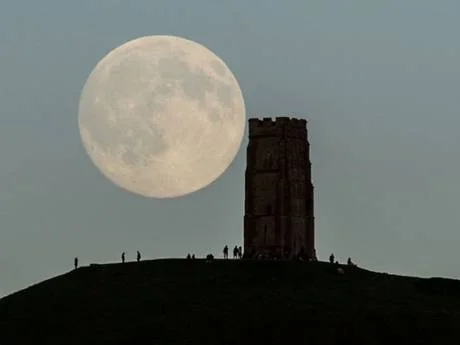
I LOVE THE SUMMER in so many ways that my son doesn't.  He shrinks at the brightness of the light, heading for the sanctuary of an airless room, while I expose my pale British legs to the available UV or suffer hours in queuing traffic to get brief respite at the coast.  Today is the second day of August and last night the sky somehow seemed so much darker, despite the wonderful illumination of a rare 'blue moon' (not to be seen for another three years, apparently).  The Sunday newspaper reminds me that that Edinburgh Festival will soon bookend a summer that started with Flowers in Chelsea and crammed in the delights of Glastonbury and Cornbury and Latitude, where designer wellies outsell sun-hats.  Folk music, unlistenable for eleven months of the year, becomes tolerable for a few weeks in the sticks while barbecues get washed in the drizzle.  But no fields full of music for me.  I've just returned from back to back trips to events in Scotland and Geneva: a busy summer leading workshops, talking to 'Next Generation' clients and their parents about the future and planning more from WYA Ltd for 2016.  Away from the machinations of work in Italy, I did devour Season Five of Game of Thrones, read The Martian (which looks like an intriguing film too with Matt Damon), read The Girl With All The Gifts and re-read The Thril of It All [again] (so good I have started buying people copies), discovered Everything Everything, been overwhelmed by a wonderful new The Maccabees album, a teaser EP from Elbow and been blown away by Pete Tong's curation of the BBC Prom's Ibiza night.  If you have not seen it, its pretty incredible: particularly via BBC iPlayer, where you get an amazing take on Faithless.  See it here.

I heared today from a friend who is holidaying on the White Island.  I have never been.  The nearest I've been to Ibiza was through the impulsive purchase of a 4 Disc CD compilation a few years ago of what can be best described as some "monster banging tunes", few of which ducked under 8 minutes long.  I know nothing of the heritage, innovators, hierarchies or genius (or otherwise) of Dance Music, the creators of Ibiza Anthems or the "rock-star DJ's" who fly from venue to venue across the summer on ego fuelled private jets.  Please then ignore the tone of the previous sentence...I have no qualifications to pass any credible judgement, but I did love the BBC Proms take on Dance Music and these two guys called Jake and Mick who perform as the Showhawk Duo. You can see them in the link here to Nick Grimshaw's show doing something rather remarkable.  

I love the summer because there is often that one song.  Sometimes called an 'ear-worm'.  You hear it in a cafe, or on the car radio and absently 'Shazam' it and then hear it again and then again and before you know...it has you hooked.  Gotye did it a couple of years ago.  Something called "Fireflies" bugged me for weeks.  In 2015 it is Wankelmut and Emma Louise: 'My Head is a Jungle".  Its hypnotically good.  There is a remix from someone called "MK", which ups the ante to 8 1/2 minutes, but the original is sparkling and lovely and over-played on my cans. Recommended. Meanwhile I flick through newspapers, printed at this time of the year without news, look out for weather reports that under-promise and over-deliver and stare out at the sea, with this song in my head.  Enjoy. 

Even better is the MK remix, or Google his version from Ibiza live in 2015.   Watch the man let it lift off.  

Public Service Re-Invention

IT WAS A perfect night for dressing up like Public Service broadcasting...

I used to 'hang-out' a lot (if that the right term for frequenting a comfortable bar) at the British Film Institute, or its better TLA name: the BFI.  It's one of those treasures of a place right "on your doorstep" (well it is if you live in a building on the Southbank of the Thames).  I became a Member of the BFI, watched lots of films, dragged my kids along to see a restored print of The Railway Children and met Marton Scorsese there (if 'met' is the right term for having attended an intimate Q&A with him and a film historian).  In 2010, I had the most extraordinary night at the BFI when I met (and this time met is the right term) Damon Gough [aka Badly Drawn Boy].  Unfortunately, I spent much of the evening calling him Damian, which he didn't seem to mind, but in hindsight, my getting his name wrong was probably less tiresome than my non-sensical ramblings about the wonders of his Once Around The Block.  The man with a beanie, it seems, did not take himself as seriously as some.  Damian, I mean, Damon and a number of other Members had managed to blag tickets to an 'audience with Bruce Springsteen' [if that is the right term for watching from afar Bruce being interviewed by some rock journalist] as he introduced a new film about the creation of Darkness On the Edge of Town.  The bar of the BFI was heaving, and Bruce joined the crowd after introducing the premiere of the film to an adoring throng of genuine Springsteen fanatics.  Now it's not every night of the week you get to have a beer within shoulder-rubbing distance of a living rock legend.  But Bruce was all humility and graciousness to all the punters asking for a photo, or an autograph, or those genuinely wanting to know what some obscure lyric referred to.  I stood with a friend agog.  Bruce Springsteen.  He shook my hand.  In the bar at the BFI. 

Despite this ready exposure to genuine rock and film making legends, I lazily let the BFI membership lapse when I joined a proper "grown up" Club.  Here, no one comes in who's famous, or rather if they are famous, everyone there pretends they are not famous and the famous person likes that and the non-famous members like that they like that and then everyone continues to eat too many chips.  So it was guilty nudge in my ribs this month when I spent so much time listening (and watching) and being wholly absorbed through some dull commutes by the rather wonderful Public Service Broadcasting.  A London-based band made of J. Willgoose, Esq. on guitar, samplings and electronic instruments; and his friend Wrigglesworth on drums.  They make great use of samples from old public information films, archive footage and propaganda material and while writing their album The War Room they formed a close relationship with the British Film Institute, using their material during live-shows.  They have scoured the archives to great effect, not just in to use of visuals, but in the finding inspiration.  Check them out on Spotify, or better on You Tube.  Night Mail is particularly evocative and provides echoes of some of the best moments from Dreadzone's Second Light.    

So it seems those hours spent in the BFI (either through some Membership subs) or contributed across a counter o'er which drinks may have traversed, continues to have been a wise investment, not just in the preservation of some old 'silent' Hitchcock films [which the BFI have magically restored] but in the creation of a new fusion of guitars and samples and old-film footage.  For a taster, try this on the subject of Yuri Gagarin, the Russian hero of the Space Race which happened in the late 1960's [allegedly].  


David responsible for saving music + the future*.

David Laurie will shortly publish his "labour of love" book about the way pop music in the early 1980's was transformed from a world of pedestrian dinosaur monochrome lumps, into a new realm of kaleidoscopic enigmatic synth powered marvellousness, inspired by Kraftwerk and David Bowie. OK, David puts it such better than I can and he has supported the launch of the book with a neat Kickstarter campaign, short film, and curated some Spotify playlists to get you into the pivotal early 1980's mood.  I have not had the courage to tell Mister Laurie that I was mainly listening to Rush and Thin Lizzy when he had Visage on the turntable, but am hopeful the book will inspire me to revisit both.  

I have written at length before about David Bowie and particularly how he crash-bang-walloped his self back into our musical lives with The Next Day in 2013, and better still, had given no real clue to the degree with which he would rock-out in that re-emergence through the unexpected release of Where Are We Now.  Now we hear that Bowie is involved in a musical version of the The Man Who Fell To Earth, due to emerge off Broadway sometime this year.  The play is to be called "Lazarus" and it's being made by Ivo van Howe and Enda Walsh.  We loved what Enda Walsh did with Once [one of the highlights of the whole of 2014 for me] so anticipation is high here at Wave Your Arms towers, though mainly hopeful that Bowie's involvement will in some way be creative, not just one of financial support.  Meanwhile, on the theme of creative rejuvenation, David (Laurie) predicts a "really good album from Duran Duran" in 2015 and, as he says, no one would have predicted THAT 35 years ago.  You can see a trailer for David's new book DARE, here.  

*David Bowie.  

Tossing noodles in Singapore

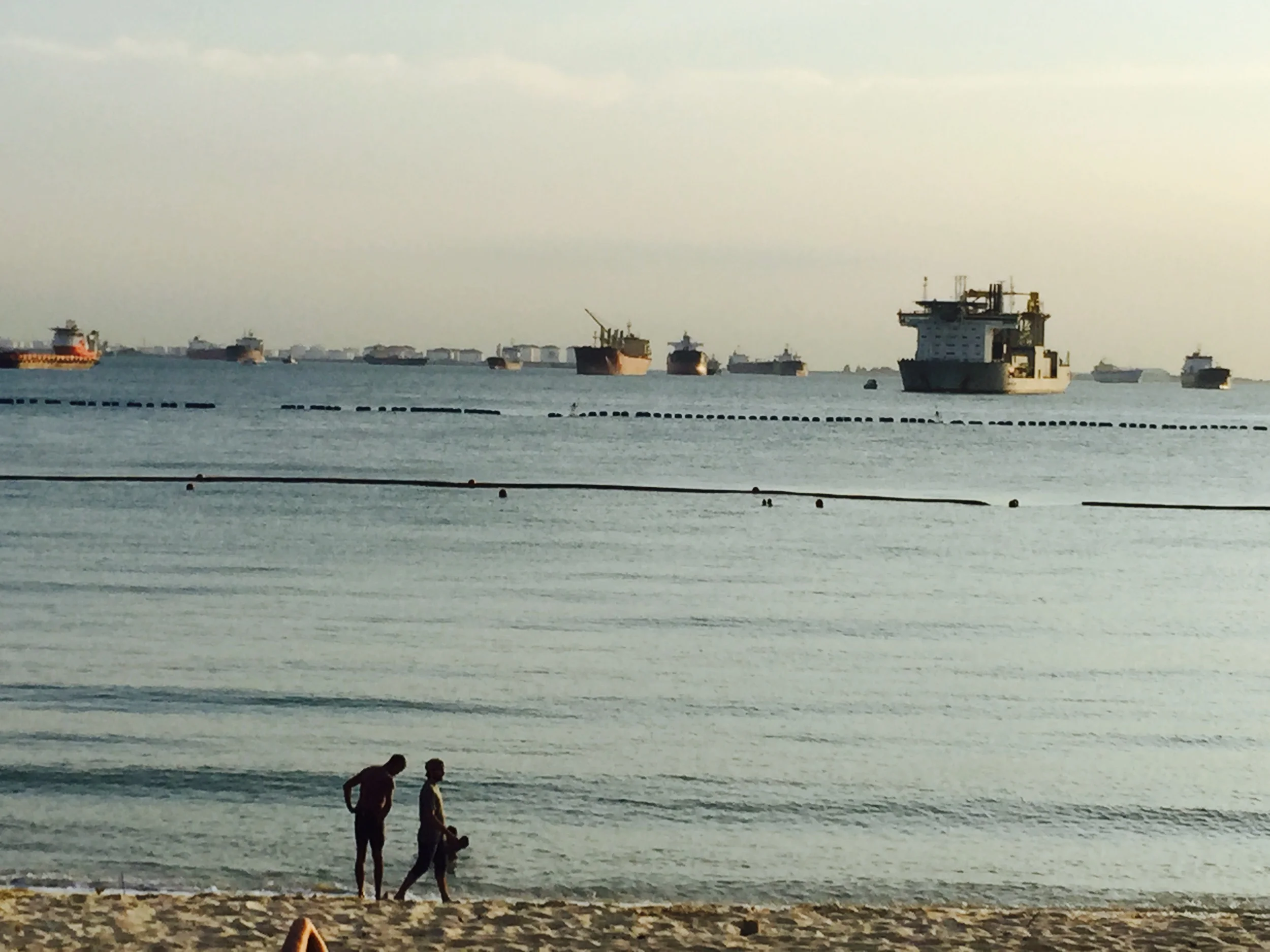
The beach at Sentosa, Singapore, March 2015

The beach at Sentosa, Singapore, March 2015

I'm just back from an amazing conference in Singapore.  I have Mosquito bites on my arms and a burnt forehead, achieved after less than two hours of (wait for it) "being outside" during the day. I now have a cough I can't shift and I have vowed never to do long-haul travel again.  Well, until next time that is. 

Singapore was a surprise.  Not like Hong Kong, where it feels like you are attending some Douglas Adams' style party at the "end of the universe" [see earlier blogs] and not as scarily avaricious and contradictory as Shanghai.  It's no criticism of those great inspiring places, but Singapore had a certain zing and zest which I did not expect, in addition to all the instantly borne-out cliches of manicured pavements, strict order and civility.  They have also seemed to have found a solution to global warming.  

England has the Eden Project, hidden away in excavated fields in Cornwall. Singapore has turned the idea up to 11 and created an artificial arboretum on a grand-scale: maybe 20 times the size of Cornish idyll, planting and preserving much of the world's foliage and fauna in Marina Bay and then bolting on a Michelin starred eatery for good measure. Here you can wander through a small section of Chilean woodland or German forrest and feel like you are on the set of Silent Running.  At dinner we celebrated the 14th day of the Chinese New Year (a kind of Valentine's style tradition) with five of the world's best golfers at a Lo Hei supper; throwing noodles high into the air, with all hopes for the rest of the year dependent on the height achieved.  

Singapore is damn hot, so I headed for the beach.  The sand and sea provided some sense of cool - even a breeze featured momentarily.  And there across the water a small glimpse of why the place booms.  It's not just the trade of the dealing room or banker's terminal screen.  It's real trade, on a vast scale with a capital T.  Out in the sea, there in front of me: I reckon 200 plus ships/tankers/freight carriers and oil supply ships within a few hundred metres of the shore.  In an hour there would be more and over the course of a few days, there must be thousands: passing through, anchoring, docking, loading and un-loading a billion tonnes of "stuff" - up from Australia, or across to India, towards and around a horn, or through a man-made canal, but always finding these wide waters the place to briefly pause, replenish, restock and move on.  The scale of the docks and super-sized cranes that surround the city state is astonishing.  Trade created Singapore and it sustains it, while the booming city retains that colonial, litter-free, heritage with an élan I had not imagined.

Despite the journey, I hope to get invited back.   

The Secret of Brilliant Team Workshops

How do you ensure that you execute your strategy through a team focused on the same priorities and a shared sense of mission and purpose?

Often this challenge comes sharply into focus during a leadership team’s annual offsite or workshop. These meetings can sometimes be pivotal, providing powerful clarity and conviction amongst the senior team. Too often though they fail to achieve very much and many participants dread the predictable format and experience of taking part. Over the years I have formed my own set of principles about how such meetings should be organised, led and delivered. But rather than give you a long list of do’s and don’ts, I think two pivotal experiences are worth sharing; one which highlights how much damage a badly convened team workshop can do, and the other, how the capabilities within teams can be harnessed with such impact.  

In short, one day ended with tears. The other ended up being the making of careers.  

The first meeting was held about a decade ago. The business was ‘re-engineering’ at pace, to a new model of operation which would provide “clarity, efficiency and economy.” Or rather, that’s what it said on the joining instructions. Unfortunately, I am not sure anyone truly bought the model before getting out of the cab that morning. No one was pre-briefed, or properly prepared.  For a number of us, it seemed our executive boss was determined to put us through some sort of ‘mad-scientist’ social experiment by convening a workshop where contrary views were ignored and ideas dismissed.  Conflict was brought to the surface (but not in a productive way) and two close colleagues faced off in a way I had never seen before.  One left the room in tears.  As far as I know, the rift created that day - amidst a mess of the flip charts, divergent arrows and white-board pens, remains.  After two-days of debating and re-plotting the implementation of a change process that no one clearly believed in, the leadership team stumbled out into the air, exhausted, frustrated and as incoherent a team as when we had arrived. 15 people.  48 hours. Nothing achieved. A relationship damaged and a rudderless team left floundering. The business and its shareholders surely deserved better?

Ten years later, a different team offsite.  This business had been hit by a series of shocks more potent than the ‘usual’ forces of markets, clients and regulators.  The business was reeling with complex management issues.  The very essence of the organisation’s brand was founded on exceptional standards of propriety, trust and integrity. And now it seemed holed. The two day workshop was a revelation and I saw a leadership team strengthened by the experience.  The business was run by a man who took time to engage the team; not to mandate the steps that would need to be implemented, or simply to introduce the consultants who would engineer a route out of the malaise.  He set out the problems before us, looking to the team for ideas, for solutions and practical steps that should be owned and acted upon in the weeks ahead.  The meeting was facilitated independently and rigorously, so that views could be aired and discussed, but ultimately decisions could be made. Many of the team grew in experience, stature and status in the months ahead. There was more trepidation and uncertainty heading into that workshop than there ever had been in the other firm ten years before.  But the coherence created was profoundly different.  

Bringing teams together to navigate future business problems can be powerful.  It can also be time consuming, risky and unproductive if not carefully thought through and led with expertise.  Think about your next offsite or workshop.  How does your leader engage with her or his team?  When you work together on a strategy workshop, does the meeting design and facilitation leave space for contributions and alternative perspectives, or just press on with a pre-determined process?  Are newer team members brought into the fold, without the trial of having to politically earn their spurs?    The positive workshop experience, in stark contrast to the disaster some years earlier, showed me that a leader can imprint their own personality and values into their teams, simply by making the workshop a little more like themselves at their best: open, professional and involving. 

The Thrill of It All

Joseph O'Connor

Joseph O'Connor

I've just finished reading Joseph O'Connor's The Thrill Of It All.  I first came across O'Connor's books when I read Cowboys and Indians about twenty years ago.  I had just moved to London from the more glamorous Hull, via Birmingham, and although I had neither Eddie’s (the hero’s) swagger nor the Mohican, I loved the tale of a punk finding his way, skint in the city.  Fast forward 22 years and I was mooching around in Waterstones opposite Exeter Cathedral and came across his new book.  I had loved The Star of The Sea (a brilliant tale set aboard a famine ship, making the journey from Ireland to New York in 1847) so I grabbed the book and I devoured it in two days.  It is a wonderful heartbreaking book about music, friendship and family.  

The story follows the formation of a band called The Ships in the Night (see what he did there) and the relationship between two close friends from different sides of the planet geographically and in all other ways (Irish Robbie and Vietnamese Fran) and a brother and sister rhythm section to die for.  The typical mode for the tale (see The Commitments, Once) is for heroic failure to be celebrated amidst fart gags and much acoustic troubadour-ing.  Here the scale is writ much larger: from Luton to Dublin to New York, from backstreet bars 'open mike' to headlining the Glastonbury Festival.  From sleeping in crap vans to flying on private planes.  Success and failure is found not heroically and humbly, but hugely and devastatingly.  The characters are drawn like old friends you will have loved, lost and clung onto over the years and the two-thirds-in kick in the teeth for Robbie and the reader is a masterstroke.  Since finishing the book I keep hearing The Ships on the radio, and on Spotify, and in old records I have not heard for years.  Someone will surely make a film or a musical of the book and however well or badly it is made, with characters drawn like this, it will be massive. 

Post-script/..17th January: I found myself in a pub last night eulogising about the book to a group of old University friends, including an Irish friend (from Hong Kong) who used to play in a raggle-taggle band.  There is a new Dublin band called Cloud Castle Lake who have a falsetto singer and an extraordinary sound (think Radiohead meets the Tijuana Brass).  For me, they have Fran on vocals.  A taster, below.  Happy New Year. 

A Year of Living Legends...

It's that looking back/looking forward time of the year again, etc.  It was a mixed year creatively, with few of the knockout films of previous years, but some wonderful records which are still being played.  Herewith then, my annual review of thrills and spills from music, film and books follows:

MUSIC

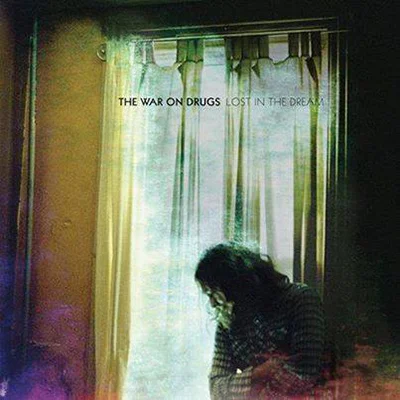
My 2014 soundtrack was provided by a few familiar artists and one or two very new. Finding the Album of the Year was simple.  I discovered The War Against Drugs (fronted by the Neil Young soundalike/lookalike Adam Granduciel) in January and according to some algorithm from iTunes, I have played their album Lost In the Dream pretty much more than anything else this year.  If you get a moment, try listening to Under The Pressure (no relation to Queen and David Bowie's song) and it's hard not to become wholly immersed in the layers and layers and layers of guitar.  The Springsteen references are obvious (and so are Dylan, John Cougar, Roxy Music and many others), but for me it brought to mind some of the early Waterboys tracks like This Is The Sea or A Pagan Place.  The song just builds and builds, rocks out and then burns away in three minutes of exhausted noise and feedback.   For an obvious taster, see below; the band, playing their single Red Eyes live in Barcelona, Enjoy.  

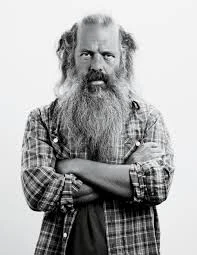
Living Legend.  Rick Rubin.  

Living Legend.  Rick Rubin.  

Also in Music, some other highlights: Baseline of the Year was Best Friend by Foster The People. Guilty Pleasure of the Year was provided by Tears For Fears who did a special feature show on Spotify. Like many of us: older, crustier, talking about song-writing and playing music again.  Angus and Julia Stone accompanied me on my increasingly random commutes with an elegant record produced by the 'living legend' Rick Rubin, who described the experience of working with the Aussie siblings as "extraordinary, I've never worked with anyone like them before."  The album is an absolute gem.  They rounded off the year by selling out a European tour topped off at the Hammersmith Apollo.  I have already bored anyone I could grab hold of about how wonderfully good living legend Kate Bush was at the same venue [see post below].  Ben Howard made a hauntingly good record and I Am Kloot produced (with help from Guy Garvey) the Song of the Year with These Days Are MineInterpol failed to hit the heights with El Pintor (though they sounded great at Glastonbury), U2 did a 'Gerald Ratner' through their full-on marketing love-in with Apple: telling their fans (and non fans) that their music was indeed puerile worthless tosh by giving it away for free to 1/12th of the planet's population via iTunes. Their hum-drum inoffensive album now has the ignominy of being "the most deleted album" in music history.  Shame.  More spirited and genuinely heartfelt was the Pop Music Performance of the Year [and several million YouTube hits later] of Future Islands Seasons (Waiting On You).  If you've not had the pleasure of watching Samuel T Herring, see the video link below.  What a guy, and an affected gravelly voice that made me think of the too recently late Joe Cocker.  In NME he claimed the tune took only 30 minutes to write. Extraordinary.  

FILMS

I neglected films badly this year. I wrote no words. I saw too few films.  I failed to get to the London Screenwriter's Festival in Regent's Park. I drank no beers at the BFI. Abrupt memo to self for 2015.  

But then again, was it a vintage year? Inside Llewyn Davies was so absent of any cheer, I basically gave up.  Marvel's Winter Soldier was a surprise and fun and action packed in a way that Guardians of the Galaxy wasn't. A preview showing of The Kingsman was enjoyed for an hour, but then spoiled by Director Matthew Vaughn's penchant for extreme violence.  Blue Valentine was a compelling performance, but the film dragged after the opening. X-Men Days of Future was rare in its ambition and passed all the required tests for pace, imagination and plot.  Great fun.  Grand Budapest Hotel made me wide eyed for an hour and then became a bore as they chased to the ending and beyond that: Imitation, Boyhood, Dawn of the Planet, Hobbit3, not really sure anything really got me in the gut like a Senna, or Liberal Arts or A Royal Affair.  You will see from the above, there are about 10 candidate films I have neither seen or noticed this year.  Could do better.  

BOOKS

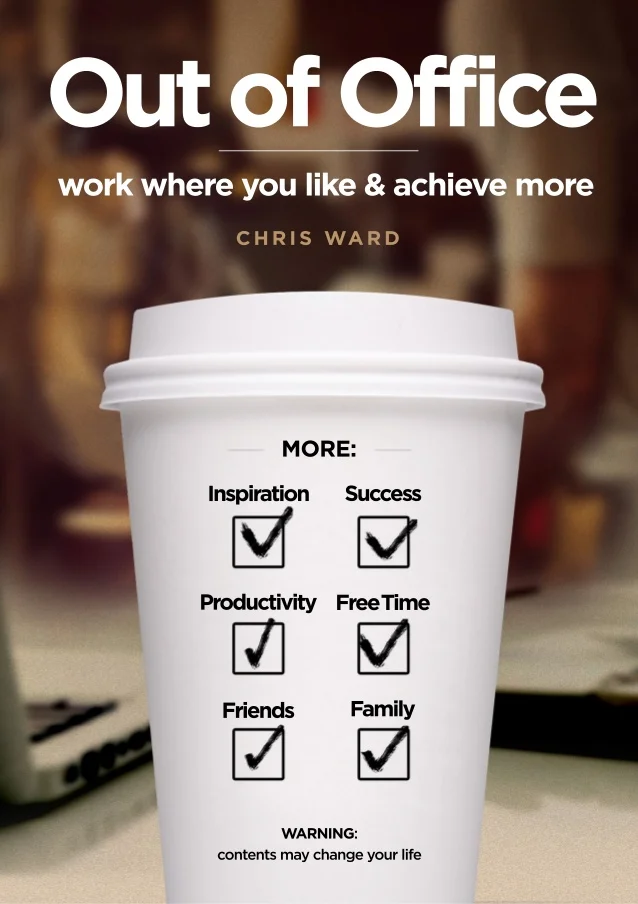
I've read too few fiction books this year, but the ones that hit home included Angelmaker by Nick Harkaway, Half Bad by Sally Green and & Sons by David Gilbert.  I Am Pilgrim by Terry Hayes was extremely good in a demented and I-am not-that-happy-about-how-scary-this-is sort of way.  I will write properly elsewehere about a number of new start-up/business/entrepeneurship books that I devoured from Easter through the summer - but two standouts were From Acorns by Caspian Woods and a fun, witty little book called Out of Office by Chris Ward. Appropriately, I read it in my favourite Pret coffee shop. Recommended.    

ELSEWHERE

Seeing King Lear at The National theatre, whilst eating popcorn in my local cinema was fun.  Attending a meeting in 10 Downing Street and being informed by a seriously gurning Mandarin that I would not be able to go to the toilet, because we "were in lock down" was quite a moment.  Doing a panel event with Alain de Botton, Jo Malone, Sarah Harper and various others in London was pretty special, but, highlight of the year was in found miles away in New York City...

Living legend.  Derek Jeter.

Living legend.  Derek Jeter.

I have written before (and pretentiously) about baseball, but had never actually watched a game. In August, that gap was filled and I watched 3 hours of major league baseball in Yankee Stadium.   It was both brilliant and befuddling. 50,000 fans sat and cheered and munched their way through six-million tonnes of food. Meanwhile, led by the 'living legend' Derek Jeter, the home team actually hit the ball three times in nine completely non-eventful innings.  My prejudice was borne out.  It is just so flipping hard to hit a ball thrown at ninety miles an hour by some 7-feet tall monster on too much caffeine (or something stronger) stood on a pile of sand only a 'stones throw' away.  Unfortunately, I was queuing for a beer when the only home-run was hit and soared into the distant stand.  Towards the end of the game, the whole crowd stood and sang God Bless America. I knew there was a reason why I had enjoyed all those american Sports movies over the years.  This was sport, not as a game, but manufactured as live theatre; grandiose and celebratory, writ large, widescreen with a choreographed cacophony of sound that no 'Dolby' filter can replicate.  Jeter retired a few weeks later, having somehow hit the ball about 10,000 times in 20 years with the Yankies.  Another, living legend.  


Tony and Kate: Artists who see the world differently

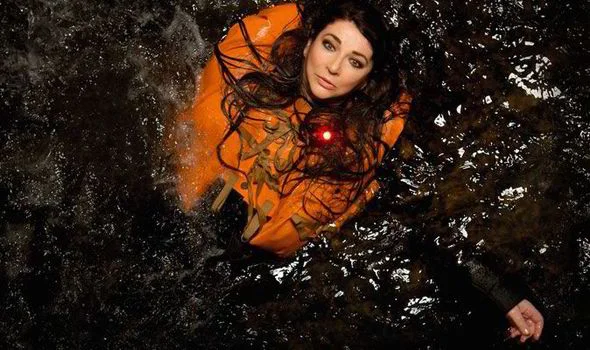
Two artists in mind this week, one I met ten years ago, the other admired, from afar, for thirty.  Kate Bush writes wonderful inspiring songs that are well loved.  But her obsessive search for perfection and her approach to recording music is also extraordinary, even perversely, meticulous.  So when I saw Kate last month, during her first live performance tour for 35 years, there was bound to be something about the event other than a routine bare-foot shuffle through a back-catalogue of hits.  She delivered on all fronts wonderfully, oddly, brilliantly as well as quirkily and - at times - annoyingly so.  Like all great artists, she was the consummate artist live, as on record.  She played a few hits then reproduced two sides of two albums (one of them deliberately obscure) as tightly choreographed theatrical performances, complete with actors, puppets, thunderous helicopters and dead-fish soldiers, before ultimately being transmogrified into a Crow suspended over the stalls.  I couldn’t do justice to my blubbering incoherence at the wonder of it all and will instead leave it to Caitlin Moran, who perfectly summed it up in The Times:  “So what is it just that you know, as you stagger out into Hammersmith – rattled, high and newborn again? This: that you have patiently waited 35 years to be reminded that you are alive.”  

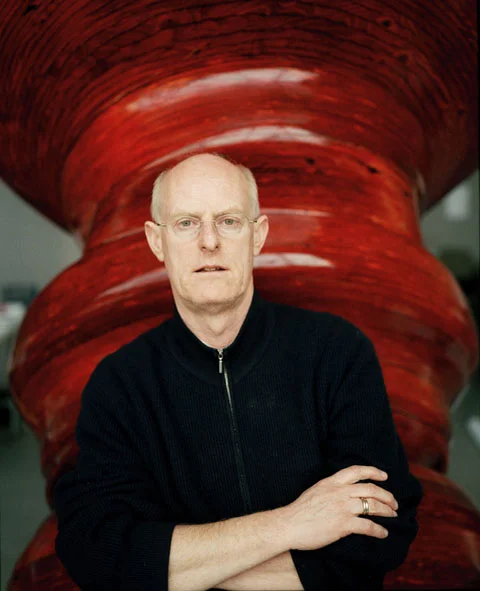
Not 35 years in the past, but ten short years ago I felt much the same in the car on the way back to Dusseldorf airport.  Earlier that day, the air-conditioned cocoon of efficiency and engineering aplomb smoothed away any sense of road surface, through suburb, then country lane, then rough track, on the way out of the city towards Wuppertal. Travelling with another colleague, we were both overly-suited and booted, heading for the hills through a landscape like something out of an episode of Heidi.  Our destination was to meet (and as we discovered, have lunch with) one of the world’s greatest living artists, Tony Cragg.  The experience will live long in the memory.  

Tony Cragg’s artistic CV is phenomenal.  An Englishman from Liverpool he made his home in Germany in 1973 after falling in love with one of its citizens. Even though his brusque reputation was known and we were well briefed by the art-advisor who arranged the trip, nothing quite prepared us for meeting Cragg or seeing Cragg’s vision realised in the enormous scale of his studio set-up in Wuppertal.

For a number of years I was responsible for a small in-house design studio.  Great creative people with enormous Mac ‘cinema displays’ and pens and pads instead of mice.  I think of these designers, turning and turning and turning - adjusting the colour, the background, the font, the pantone - trying to get things perfect, finally hitting save and then, looking again.  In Wuppertal Cragg does the same with materials, metals, plastics, vast organic and inorganic resources that are moulded, shaped, hammered and caressed to his will.  His studio team serve his vision all hours and he was brutally curt with some of them.  They didn't blink.  The Wuppertal studio is a fusion of Xanadu and Wonka's Factory.  Creativity writ large, ambitiously and memorably.  

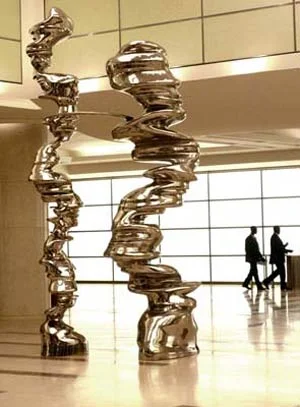
The piece that we had commissioned was still being hand-polished (is there any other way?) in a nearby steelworks.  It would be another six months before the blackened welded mess of steel would be made to adopt the stunning reflective glory of the finished piece.  It now sits in the lobby of Barclays headquarters in Canary Wharf, or you can catch a close-up glimpse of a copy in the lobby of the lovely Haymarket hotel in London.  

When Cragg flew over to position the piece in the Wharf, he made the enormous crane re-lift it twice.  Each time, adjusting the angle the slightest degree, repositioning for light, or reflection, or maybe, given the mere millimetres it moved, just for effect.  The then un-titled piece was positioned again.  Cragg looked unimpressed, then satisfied he walked away. Onto the next monolith.  

Kate called it Cloudbusting.   Cragg called it Constant Change.  

Flying Robots Join Cirque Du Soleil

 Ten years ago I saw Cirque du Soleil at the Albert Hall.  At the end of the first act of Alegria, the whole theatre was turned magically into a snow-storm while a single forlorn clown staggered across the stage.   Wonderfully done and only surpassed this month when Kate Bush did something similar during her residency at the Apollo theatre in London [a performance I should eulogise about another time].  With that in mind, I came across this short film this week which is rather lovely and sort of mind-boggling at the same time.  Cirque du Soleil have partnered with a Swiss technology firm to develop a short film featuring 10 quad-copters in a flying dance performance. The collaboration resulted in a unique, interactive choreography where humans and drones move in sync. Precise computer control allows for a large performance and movement vocabulary of the quad-copters and opens the door to many more applications in the future.

At the theatre again, I remember being hugely impressed when the producers of Chitty Chitty Bang managed to get a car to seemingly fly over the audience (well the first few stall seats at least) at The Palladium.  The mechanics and engineering behind that 'show-stopper' was massively complex and expensive.  Suddenly, with Cirque and partners' innovation, special effects opportunities may well explode: props that fly, furniture and scenery that moves itself and interiors on stage that interact with actors.  The dynamic and value of objects suddenly takes on a whole new dimension.  Whether there will ever be a production of Noises Off that can made any funnier by such marvels I am less sure, but certainly any play where "things go bump in the night" might.  This movement could be terrifying, and remarkable, even beyond the boundary of the first few rows.    

 You can see the film here:


Welcome to the Hotel Deja Vu

Caberet style

I have been fortunate to be involved in hundreds of business events over the years.  From glamorous six-star 'retreats' for top-performing managers to ‘down in the basement’ team-meetings. Unfortunately, events are a victim of their own success and, whether big or small, the gravitational pull towards the 'repeat performance' is often over-powering. Too often, these annual events are then repeated in the same format, often in the same venue, with much the same content the following year. But where's the creativity?  Where's the much needed fresh perspective? [So - with a gentle nod to the various production teams, faculty, speakers and event designers I have had the pleasure of learning from; herewith a slightly unoriginal 'top ten tips' to consider before you begin organising your next event.]   

Involve your AUDIENCE.  The design should have in mind, from the off, active participation, engagement, discussion, dialogue and debate which aims to involve everyone.  As soon as the event looks like a lecture, or a trip to the theatre, cancel the bus, or better - simply take the team to a real theatre instead.  [Remember, cinemas have popcorn, art galleries have a shop and theatres have a curtain. Events that engage employ a facilitator.]

Avoid SEQUELS.  How many movie sequels are better loved than the original?  Your over-riding concern should be to move on from last year.  However successful, don’t simply redo what you did again.  Challenge the team to start the planning with this goal in mind.  You might want to replicate the success of last year’s event, but in design terms, try to start with a blank canvass.
   
Reflect on the NEGATIVES.  The only useful feedback from the previous year's event is the negative.  Too many events are damned with a kind of 'faint praise' that can be at best summarised; 'I was in no way harmed' and rosy-cheeked praise for the hotel, shuttle-bus driver and charismatic keynote.  But could anyone remember the content?  If you are spending real money on an event, then take note of the attendees who hated it last year, not just the one's who loved it.   Design the feedback form as a learning tool, not an easy way to capture platitudes.  

Think NEXT GEN.  Your organisation team should include some young people.  Search out the youngest tech-savvy cynic you can find.  Get a 20 year old involved on the planning team.  When they grimace at your ideas, sit up.  Seek their input: it’s valuable, important and a reality check.  You can learn lots from them. Don't ban technology (phones, iPads, etc.) from the hall, make them an integral part of the way the event works.  

Make it LOOK different.  Throw out the set design, the pedestal, the comfy panel seating, the 4:3 ratio screen.   Hire someone new to re-design it.   Explain what you are trying to do, and ask them what they think. You might find their radical ideas provide a breath of fresh air.

Don’t serve CHEESE  Never turn the event into some kind of "healing".  Emotional manipulation and stunts are like so last year.  No one should be made to walk across coals, cry, describe their childhood pet or open up in a way that embarrasses or, worse, nauseates.  Keep it real and inspiring through the participation of the many, not the life-changing out-pouring of the few emotive types.  

Go ELSEWHERE.   Einstein said : “Insanity is doing the same thing over and over, and expecting a different result each time.” Forget the usual venues, the same old same old safe cities, hotel chains and conference halls.  Surely an organisation that makes enough money to justify a leadership conference or team offsite has the imagination to look beyond the safety of same old, same old. 

Re-think THE ROOM.  Think about the organisation of the room itself.  Everyone knows that they are going to come in to this big room, there are going to find lots of seats, and they are all going to be pointed at the front. SO CHANGE IT. Radical times call for radical change — and that’s a good point to get across. Unsettle.  Disrupt.  Give attendees an ability to shape space, or explore, not be static and inert.  

Don't obsess on BAD FOOD.  When choosing the venue - don't get too hung up on the catering.  If great food and drink is the priority, book a restaurant and buy the team dinner.  Everyone knows how awful the buffet will be - so stick a big sign above it saying: “Eat if you dare.”  Engaging the stomach is not the same as engaging hearts and minds.  

PROGRAMME it differently.   Invite a speaker your audience have never heard of.  Invite someone to talk from an industry wholly unrelated to the normal operation of your business.   Order the sessions differently.  If your CEO typically does the opening address because that is what she/he expects to do, then that's exactly how your audience will react.  Yawn.  Go on. Put the CEO on after lunch.  I dare you.  

CONFRONT BORING. The fact that there are articles like this circulating on the the inter-web is not a good thing.  The corporate events world is suffering from a lack of imagination. The same programmes. The same content.  The same table settings.  The same stuff.  The same places. The same things. The same phrases.  The same “motivational’ speakers.  The very fact that you confront this dullness, even in the smallest way, for your audience will be like an energising shot in the arm.  And remember, if some of it misfires, use the feedback and re-shape for next year. 

Yes, and I know that’s a top ten list with eleven items.  I'm just mighty impressed you stayed with me this far.  

In with the new 'In Crowd'

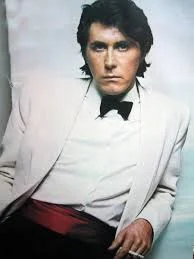
Forty years ago, Bryan Ferry throatily boasted "I'm In With In Crowd".  Now, I'm sure Bryan had more lascivous pursuits on his mind than raising finance for a new business start-up, but either way, the "in crowd" has been for decades the only realistic route to obtaining finance.  

Unfortunately, most 'Angel' investors and private equity types went to a different sort of party to the average entrepreneur.  Short of self-humiliation in The Apprentice, or deep-freeze incubation of your brilliant idea for a rare chance to appear on Dragon's Den, the options may have seemed painfully narrow.  Despite being roundly castigated and shamed by governments, regulators, the media and their own customers, the major Banks have appeared immutably slow and inflexible [does everything have to be secured against your home?] Maybe there is a more balanced debate needed about the real costs and risks of credit, but funding for small and start-up enterprises is not a story Bank's have told well.  In recent years, fresh-faced "challenger" banks may well have appeared, but their financing and securitisation model is pretty much the same - just branded differently, with the option of longer branch opening hours.  

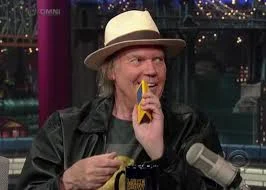
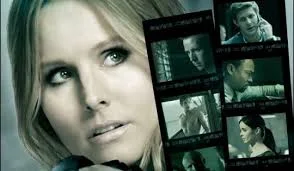
Amidst this numbing inertia, entrepreneurs have had to look elsewhere and the business of Crowdfunding has exploded into life.  Unlike the 'dull thud' of old-fashioned banking, Crowdfunding's growth has also been accompanied by wonderful headline-grabbing stories. In 2013, USD10 million was raised for something called the Pebble watch (even though Apple was well-known to have 200 engineers already refining an 'iWatch' of its own). In securing the rights to what may well be the worst name ever for a device ever, rock dinosaur Neil Young has easily raised over USD6 million for a music player called the "Pono".  Meanwhile, almost 100,000 subscribers flooded Kickstarter with enough cash for the feature film 'Veronica Mars' to actually get made, be derided and go straight to video.  

Neil's Pono, USD 6 milion

Neil's Pono, USD 6 milion

Pebble, USD 10 million

Pebble, USD 10 million

Veronica Mars, too much

Veronica Mars, too much

The Crowdfunding fundraising business is now worth over USD5.1 billion world-wide. In global corporate finance terms this is slightly less than 'diddly-squat' [being less than 10% of the total UK Market Cap of Lloyds TSB].  The opportunity then is enormous.  E-normous!  And here's why...

Crowdfunding platforms didn't all go to the same school.  They don't huddle down and compare betting slips in private member's clubs.  They are accessible, urbane, unpretentious, impartial and - now here's the genius - 'democratic' in the best sense possible. One of the newest-shiniest we have seen just launched at the end of August in London. Crowd2Fund was founded by Chris Hancock, who may or may not have gone to the right parties to get started, but indisputably has moved mountains to build and launch something very cool. In an era when caution or replication is the default mode, hats off to Chris and his team in creating something that broadens and deepens the crowd-funding model as a full-service platform that allows potential investors not just to browse and cherry-pick, but to create and build a portfolio of diversified investments.  Here at Wave Your Arms, we have no vested interest of our own other than to wish Chris and his team all the best and, we hope in time, to watch them fly.  Now obviously, when they do, we hope to get invited to the party.  

But as Ferry sang in 1974, "If it's square, we ain't there."  

Putting the cool into collaboration

Walk Off The Earth share the one about only remembering one guitar for the gig.  

Walk Off The Earth share the one about only remembering one guitar for the gig.  

A few years ago I was sent a great video by Canadian band Walk off the Earth, playing a cover version of Gotye's Somebody I Used to Know.   Five musicians, all playing just one guitar simultaneously, was not just quirky to watch, the song was brought vividly to life (perhaps more than the dark original) by the wit and fun of it all.  A few years later and a meagre 170 million YouTube views hardly seemed to do it justice.  If you never saw it, it's posted CLICK HERE.

Then just this week, I came (somewhat late to the party) across Pentatonix, a five piece vocal harmony group doing the same song; this time without the guitar, but with beat-box and an extraordinary array of voices from very high to deeply low.  You can watch, open-mouthed I guess, a showcase of their talent here.  Which got me thinking.  Is it the fact that the music produced is good, or is it that the challenge of the creative process itself that amazes?  If these were just audio recordings, rather than videos, would we have taken much notice, or is there something in the fascination of watching great creative collaboration that inspires us?  

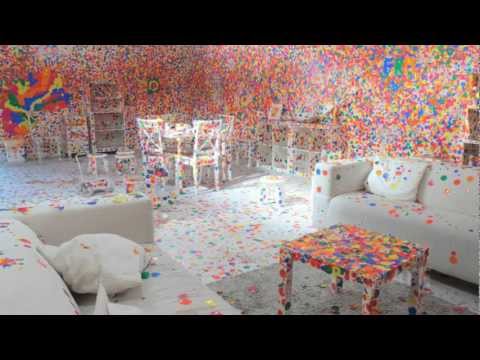
I was reminded of the wonder of collaboration when The Tate in London curated a work of art created by the artist Kusama.  But the artist did not work alone, she involved every single visitor to the exhibition to take part in the creation of the work [see Kusama's Obliteration Room below].  All visitors were invited to apply stickers: dots of colour, exactly where and how they saw fit to a blank white room. The more the collaboration was extended, the more colour was added, the more personality and variety added.  If you have a few minutes to watch the film, or just skim through, the results are rather wonderful.  

Over the past few years, I have designed a series of collaborative exercises for teams that mix the wonder of that creative process, but with the added 'business' fuel of real world competitiveness and pace.  The remarkable thing is not just the resultant work, which is often amazing, but that there is also something deeply involving and engaging in the use of art itself as the object of collaboration.  Way better than running over a muddy field.  There is something in simply creating together which teams would do well to hold fast to when they return to the workplace.  

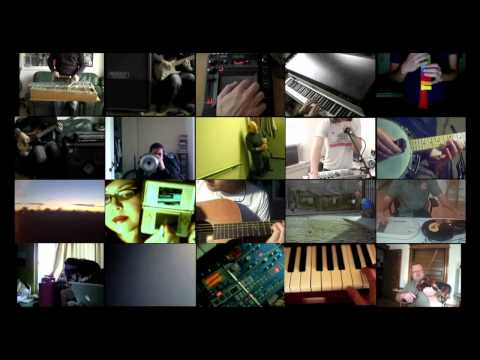
Then this week via StumbleUpon, we discovered another form of artistic collaboration which is intriguing and strangely compelling.  In Bb 2.0 is a collaborative music and spoken word project conceived by Darren Solomon (website link here) and developed with contributions from users all over the world. The videos can be played simultaneously - the soundtracks will work together, and the mix can be adjusted with the individual volume sliders.  Sometimes, to these ears, it sounds a mess, but every now again through the serendipity of a the right mouse click at the right moment, it can sound rather lovely.  [Think making Talk Talk's Spirit of Eden in your own office!]  And by its very nature, every single "collaborative composition" you create in the comfort of your own home - is uniquely yours.  So, invest in headphones.  Enjoy. 

You can play with In Bb2.0 here, or just browse the short film below. 


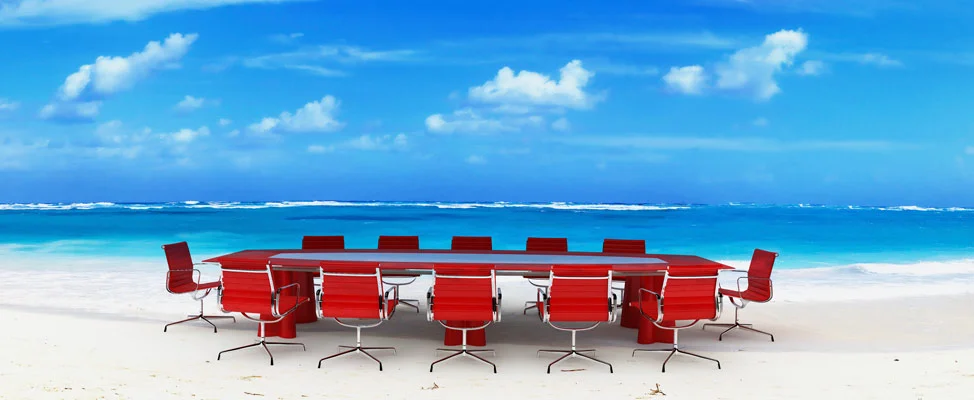
Go on...get a room!

Unknown.jpeg

We recently had a debrief on the Cannes Lions festival.  I didn't get an invite to go to the actual bash, but hearing a breathless attendee or two positively gush about how amazing the "work" was this year was both moving, humbling and a little annoying.  Its a bit like the Cannes Film festival that you read about in the papers, but since it has none of the glamour of the movie festival, nor is it as riotous as MIPM (the massive property offsite for Europe), you may not have heard of it.  Its Cannes for Advertising and media types.  The week includes various (well, dozens) of awards for creativity, innovation, technology, directing, etc.  The Grand Prix this year went to a quite wonderful advert for Volvo Trucks with Jean Claude Van Damme doing the splits between two massive Volvo's going backwards.  You can see it here.  

But the award which raised the most smiles (in the debrief at least) was a wonderfully clever 'knowing' film about the reality and perversity of Conference calls.  A thousand times (well it feels that many) I have sat in an airless office, alone, shouting my name at a blackberry on mute trying to ineffectually participate in the wonderful nonsense that is the Conference call.  When all I had to do to avoid the stress, the hassle and banality of it all, was get on the plane.  Read a book.  Get off the plane.  Meet the people who I needed to see.  Get to know them, like them and become friends with them.  And, maybe - become good colleagues, collaborate better and be more productive.  I know about the ozone, and the expense, etc., but please do watch this and then perhaps mention to your boss.  After the 'austerity drive'...shouldn't we get the team together this year?  You know, in the same room?